Botox for chronic migraine
When the headache is there on more days than not, migraine is no longer a nuisance but an illness that governs everyday life. For chronic migraine, botulinum toxin has been an established preventive treatment for years — not a painkiller for the attack, but a prophylaxis that can reduce the number of headache days.

At a glance
| Presentable again | immediately |
|---|---|
| First effect | after 2–4 weeks |
| Assessable | after 2 cycles |
| Repeat | every 12 weeks |
| Duration | approx. 20–30 min |
| Cost | according to findings |
Chronic migraine — and what that means exactly
Chronic migraine is diagnosed when, over at least three months, headaches occur on 15 or more days a month and at least eight of those days have migraine character. That is a different condition from occasional migraine attacks — and treatment with botulinum toxin is intended only for this chronic form.
The treatment works preventively: it does not stop an attack in progress but aims to ensure that fewer attacks occur and that those remaining are milder. The principle: botulinum toxin is placed at defined points in the forehead, temples, back of the head, neck and shoulder girdle. There it dampens the transmission of pain signals and at the same time relaxes the pericranial musculature.
One important point first: the diagnosis belongs in neurological hands. If you do not yet have a confirmed diagnosis, or if no classic migraine prophylaxis has been tried, the first step is to a neurologist — not to us. We tell you that openly at the introductory consultation instead of treating you.
How does the treatment work?
-
01
Introductory consultation and previous findings
We go through your headache history: how many headache days a month, of what character, which medications, which prophylactic treatments have already been tried. A headache diary is worth its weight in gold — bring it if you keep one. Bring your neurological findings as well.
-
02
The treatment
approx. 20–30 min
The injections follow a standardised scheme at defined points across the forehead, temples, back of the head, neck and shoulder girdle. We work with very fine needles; the individual injections are brief and easily tolerated. Afterwards you can leave straight away.
-
03
The first weeks
The effect builds up over two to four weeks. During this time it is essential to keep your headache diary — only then can it later be judged properly whether and how strongly the treatment works.
-
04
Assessment after two cycles
The treatment is generally repeated every twelve weeks. Whether it works for you can only be judged properly after two complete cycles. If nothing has improved by then, we honestly advise against continuing.

Why at the Kuzbari Centre
-
Carried out by specialist doctors
Exclusively specialist doctors thoroughly familiar with the anatomy of the head, neck and shoulder girdle.
-
A standardised scheme
We treat according to the established injection pattern, not by feel — reproducible across all cycles.
-
An honest indication
If the diagnosis is missing, or if another prophylaxis would make sense first, we say so.
-
Short waiting times
The twelve-week rhythm only works if appointments are available. We make sure they are.
-
An invoice you can submit
You receive a detailed invoice that you can submit to your insurance.
-
Everything under one roof
A licensed hospital with ISO 9001 certified quality management in the heart of Vienna.
Migraine, tension headache or jaw?
Not every recurring headache is migraine. A dull, bilateral pressure that is worst in the morning and comes with a tense jaw is frequently caused by nightly teeth grinding. For that there is a completely different and much simpler treatment.
Migraine, by contrast, is typically one-sided and throbbing, worsens with movement and often comes with nausea and sensitivity to light and noise. At the introductory consultation we work this out together — and if your headache comes rather from the jaw, our page on bruxism holds the more appropriate answer.

A professional treatment requires three things
-

Experienced specialists
The injection scheme for migraine involves considerably more points than a cosmetic treatment and extends into the neck and shoulder girdle. Anatomical confidence counts here — only specialist doctors treat at our centre.
-
Only the best products
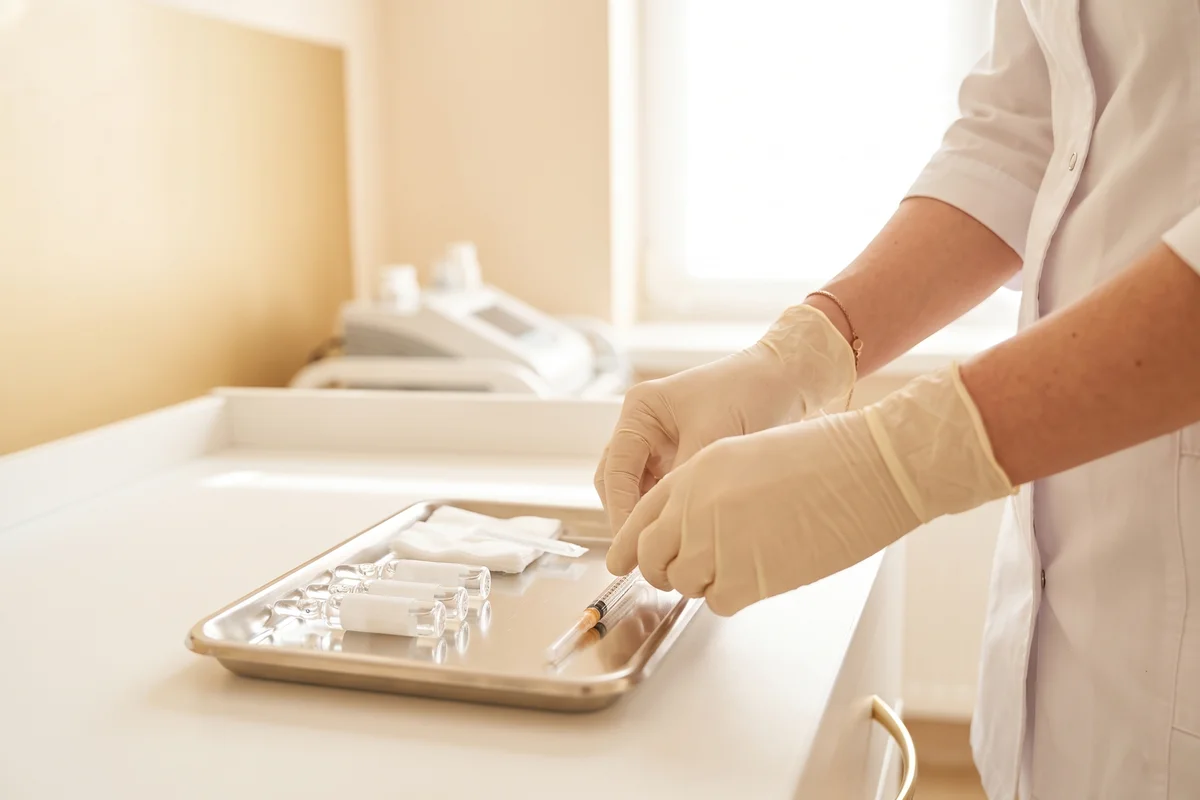
Migraine prophylaxis uses considerably higher numbers of units than expression lines. We use exclusively clinically tested botulinum toxin from renowned manufacturers, from freshly opened vials.
-

Time for the consultation
We take time for your headache history, discuss realistic expectations and agree together on how we will measure success. Without that conversation we do not treat.

The most frequent questions
Does Botox help with every kind of migraine?
No. The treatment is intended for chronic migraine — that is, at least 15 headache days a month over at least three months, of which at least eight have migraine character. For episodic migraine with only a few attacks a month it is not the right choice.
Does it work immediately if I am having an attack right now?
No, and that is an important difference: botulinum toxin is a prophylaxis, not an acute medication. It is meant to prevent attacks from occurring. You continue taking your acute medication as usual — though often less frequently.
How quickly will I notice something?
The effect builds up over two to four weeks. Whether the treatment works for you can only be judged properly after two complete cycles — that is, around half a year.
How often do I have to come?
As a rule every twelve weeks. This rhythm is part of the treatment scheme; longer intervals give away part of the effect.
How many injections is that?
Considerably more than with a cosmetic treatment — the scheme is distributed across the forehead, temples, back of the head, neck and shoulder girdle. The needles are very fine and the individual injections brief. Most patients find it easily tolerable.
Will my facial expression change as a result?
The points in the forehead area are part of the scheme, so the forehead may look smoother. Many people find that a pleasant side effect. If you expressly do not want it, tell us — we will discuss what can be adjusted without jeopardising the effectiveness.
What side effects are there?
The most common are temporary neck pain or a feeling of heaviness in the neck, slight muscle weakness and small bruises at the injection sites. These subside by themselves. We explain all possible risks to you in detail before the treatment.
Do I need a referral or a diagnosis?
A confirmed neurological diagnosis is the prerequisite. Bring your findings and, if you have one, your headache diary. If both are missing, we clarify that first before treating.
What does the treatment cost?
The cost depends on the amount used, which for the migraine scheme is considerably higher than for a cosmetic treatment. We tell you the specific figure at the introductory consultation, before anything happens — and of course beforehand, not afterwards.
Does health insurance pay?
The treatment is a private service here. Whether and to what extent your insurance contributes depends on the findings and on the insurer. You receive a detailed invoice from us to submit.
Can I continue taking my migraine medication?
Yes. The prophylaxis does not replace your acute medication and does not in principle exclude other prophylactic treatments. What matters is that your neurologist knows about the treatment.
Am I presentable again straight away?
Yes. Apart from possible small injection points, nothing is visible. You should skip sport and sauna on the day of treatment.
One partner for everything that comes next
Very few people stay with a single treatment all their lives. At the Kuzbari Centre you have the entire spectrum under one roof — from a cosmetic treatment to major surgery, from the same doctors who already know you.
-
Cosmetics & skin quality
Peelings, microneedling, medical skin care – the basis for an even complexion.
view → -
Botox & fillers
Relax expression lines, replace lost volume. 15 minutes, no downtime.
You are here -
Outpatient facial surgery
Eyelid lifts, hooded lids, eye bags – small procedures with a great effect, under local anaesthesia.
view → -
Facial surgery
Deep plane facelift, neck lift and rhinoplasty – when tightening needs more than an injection.
view → -
Body surgery
Liposuction, abdominoplasty, breast augmentation and breast lift in our own operating suite.
view →
That is why you are always in the right place with us. We tell you honestly if Botox is not the right answer to your concern – and can show you in the same building what would be. No referrals elsewhere, no second history taking, no need to build trust anew.
The Kuzbari Centre is a hospital with beds, licensed by the Vienna provincial government, with ISO 9001 certified quality management and its own operating suite – in the middle of the Golden Quarter.
Book an introductory consultationWho will treat you
-

DDr. Jessica Wittmann
Specialist in Oral and Maxillofacial Surgery · leading expert in Botox & fillers
-
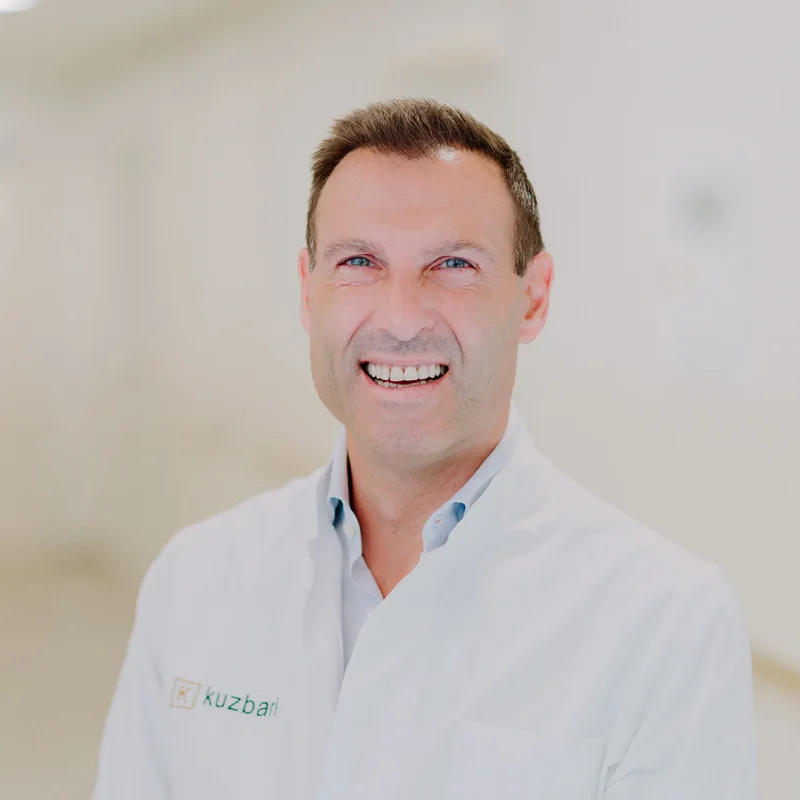
Dr René Draxler
Specialist in Plastic, Aesthetic and Reconstructive Surgery · leading expert in Botox & fillers
-

Dr Shawqi Arafat
Specialist in Plastic, Aesthetic and Reconstructive Surgery · leading expert in Botox & fillers
-
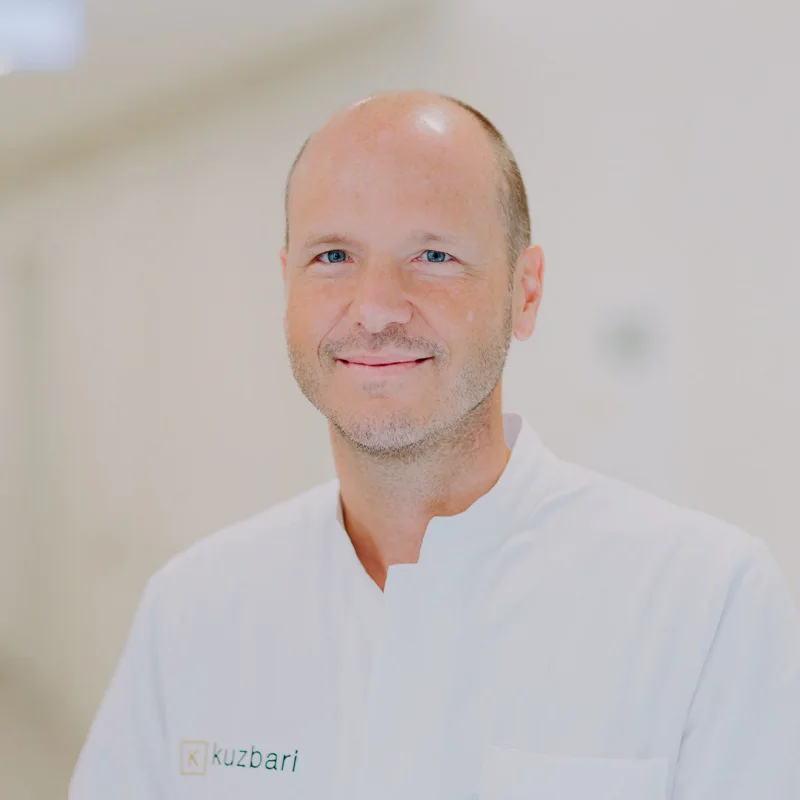
Dr Andreas Dobrovits
Specialist in Plastic, Aesthetic and Reconstructive Surgery · leading expert in Botox & fillers
-

Dr. Esther Tamandl-Wassermann
Specialist in Plastic, Aesthetic and Reconstructive Surgery · top expert for Botox & fillers
Book your introductory consultation now!
At this appointment our doctors take plenty of time for you. We listen to you, analyse the areas that trouble you and show you how they can best be treated. And if you wish, your treatment takes place straight away.
We always make sure there are enough free appointments – you can reach us by phone on +43 1 358 28 77.
Our experts for Botox & fillers
DDr. Jessica Wittmann
Specialist in Oral and Maxillofacial Surgery · leading expert in Botox & fillers
Dr René Draxler
Specialist in Plastic, Aesthetic and Reconstructive Surgery · leading expert in Botox & fillers
Dr Shawqi Arafat
Specialist in Plastic, Aesthetic and Reconstructive Surgery · leading expert in Botox & fillers
Dr Andreas Dobrovits
Specialist in Plastic, Aesthetic and Reconstructive Surgery · leading expert in Botox & fillers
Dr. Esther Tamandl-Wassermann
Specialist in Plastic, Aesthetic and Reconstructive Surgery · top expert for Botox & fillers