Treating bruxism with Botox
Grinding at night, waking up with jaw pain and a headache: bruxism wears down not only your teeth but also your nerves. Botox in the chewing muscle reduces the force with which you unconsciously bite down — without you losing anything when you chew.
At a glance
| Presentable again | immediately |
|---|---|
| First relief | after 3–7 days |
| Final result | after 2–4 weeks |
| Duration of effect | 4–6 months |
| Duration | approx. 15 min |
| Cost | 490 € |
Why the jaw does not let go at night
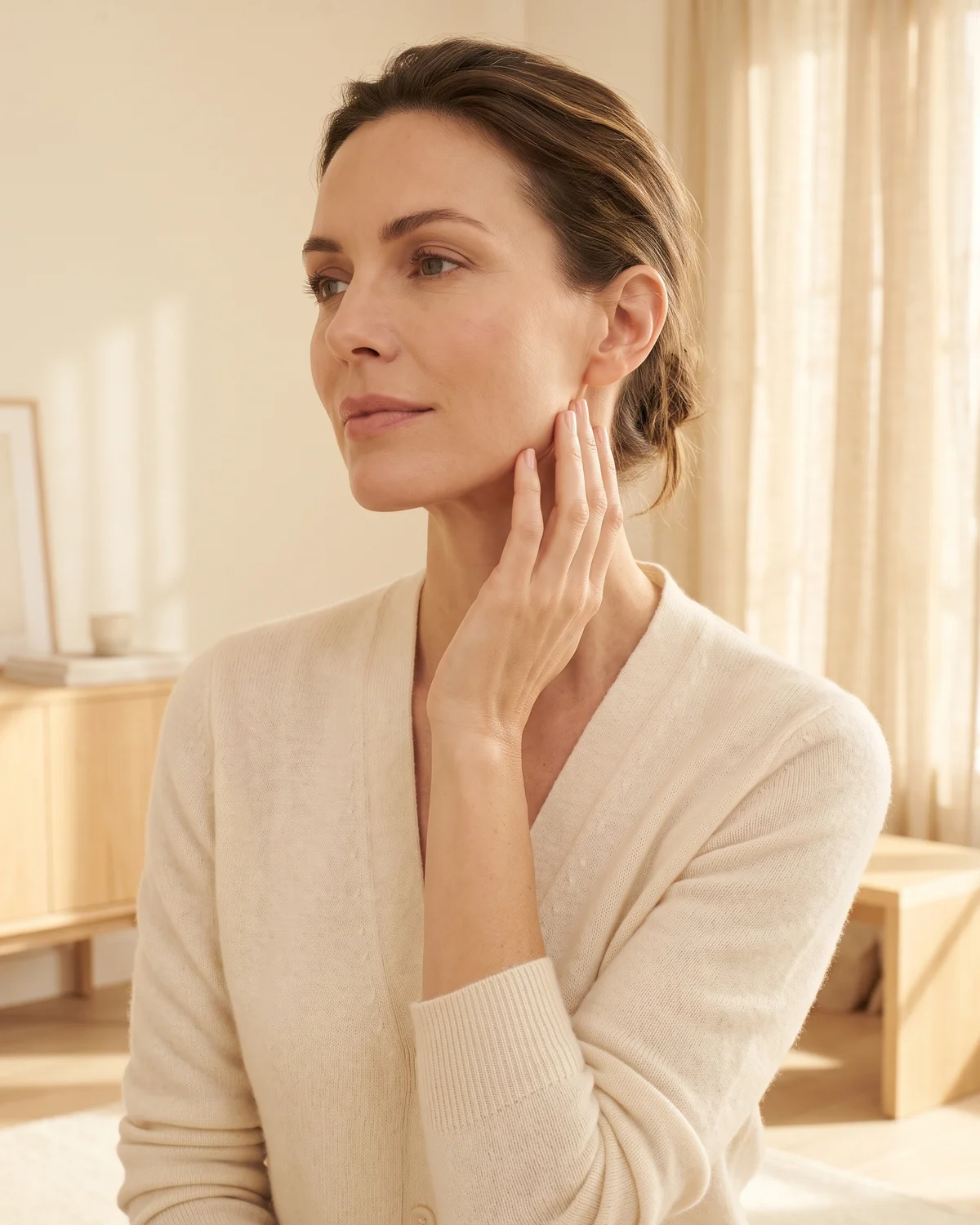
The chewing muscle — medically the masseter — is, relative to its size, the strongest muscle in the body. When grinding and clenching, it develops forces far beyond what normal chewing requires. Usually this happens at night, unconsciously and over hours.
Those affected know the consequences well: worn tooth surfaces, sensitive tooth necks, a tense jaw on waking, pain in front of the ear, clicking in the jaw joint and tension headaches radiating into the temples. Over the years the muscle also grows — the lower third of the face looks wider and more angular.
A bite splint protects the teeth from wear but changes nothing about the force. That is exactly where Botox comes in: we reduce the muscle's maximum force without immobilising it. Chewing, speaking and laughing work as before — only the nightly clenching comes to nothing.
How does the treatment work?
-
01
Introductory consultation and findings
We examine your jaw and ask you to bite down firmly — the masseter then stands out clearly and we can determine its size and position precisely. We ask about pain, sleep quality, jaw joint sounds and any existing dental findings. If a splint makes sense, or if the jaw joint should be assessed by a dentist, we tell you openly.
-
02
The injections
approx. 15 min
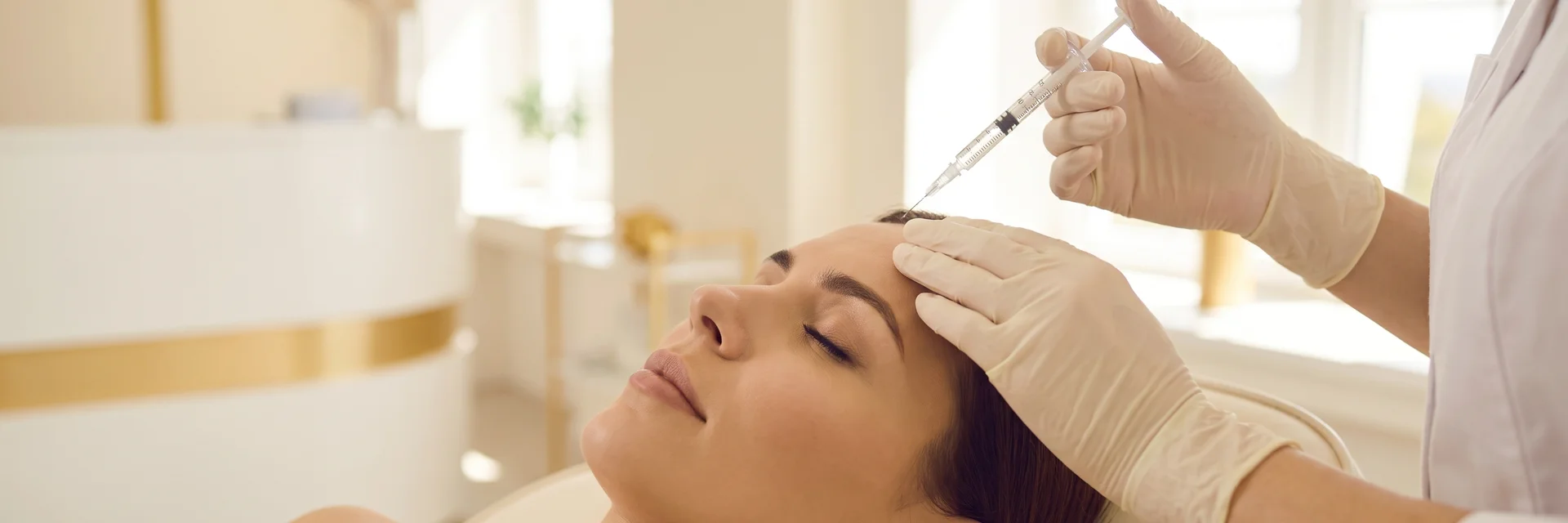
We mark the belly of the muscle on both sides and place several injections per side with a very fine needle. The masseter lies superficially and is easy to reach — the treatment is short and, for most patients, barely uncomfortable. Anaesthesia is generally not needed.
-
03
The first weeks
After three to seven days you feel that your jaw is looser in the morning. Full relief develops over two to four weeks. The narrower contour of the lower third of the face — a welcome side effect for many — appears more slowly, usually only after six to eight weeks, because the muscle has to lose volume for that.
-
04
Refreshing the treatment
In the masseter the effect usually lasts longer than in the face: four to six months is typical. Those treated regularly often need less material over time, because the muscle permanently loses volume and strength.
What changes
-
Less jaw pain
The morning pressure in front of the ear and the tense feeling on waking ease noticeably.
-
Your teeth are protected
Less force means less wear on enamel, crowns and fillings — and fewer repairs at the dentist.
-
Fewer tension headaches
Many patients report that the headache in the temples disappears together with the jaw tension.
-
A narrower facial contour
A thickened chewing muscle recedes — the lower third of the face looks finer and less angular.
-
Chewing stays normal
We reduce maximum force, not function. Eating, speaking and laughing do not change.
-
Combinable with a splint
Botox does not necessarily replace the bite splint — together the two often work best.
When Botox is not the answer to grinding
Bruxism rarely has a single cause. Stress, sleep disorders, misalignments of the bite and problems in the jaw joint all play a part. Botox takes the force out of the muscle — but it removes neither the stress nor a misalignment.
That is why in some cases we send you to a dentist or orthodontist first, before we treat: for instance if the jaw joint itself hurts, if the bite obviously does not fit, or if a splint has never been tried. At the introductory consultation we tell you honestly whether an injection makes sense in your case — or whether you would only be losing time and money.

A professional treatment requires three things
-

Experienced specialists
The masseter lies right next to the salivary gland and the muscles of the corners of the mouth. Injecting imprecisely here risks a crooked smile. Here you are treated exclusively by specialist doctors for whom facial anatomy is daily craft.
-
Only the best products
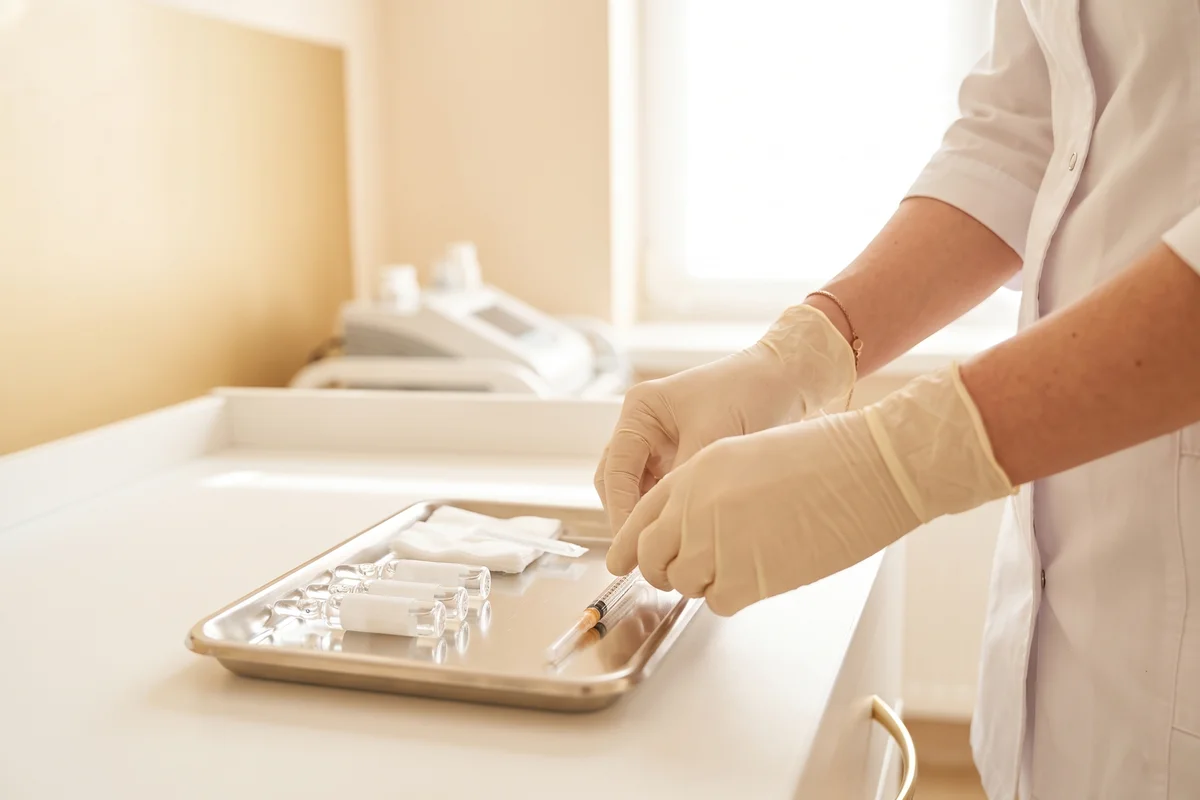
The chewing muscle requires considerably more units than a forehead line. That makes it all the more important that the preparation is clinically tested and comes from a freshly opened vial — which is a matter of course here.
-
Time for the consultation
Bruxism is a medical topic, not a cosmetic one. We take the time to understand your symptoms, your sleep and your dental history — and tell you what Botox can achieve and what it cannot.
The most frequent questions
Can I still chew normally after the treatment?
Yes. We reduce the muscle's maximum force, not its function. Chewing a steak may feel slightly more strenuous for some people in the first weeks; everything else stays unchanged. That is exactly the point: eating requires only a fraction of the force generated by nightly clenching.
When will I feel the first relief?
Usually the morning pressure eases after three to seven days. The full effect develops over two to four weeks, because the muscle needs time to relax.
How long does the effect last?
In the chewing muscle typically four to six months — longer than for expression lines, because more units are used here. With regular treatment the intervals often become longer.
Will it make my face narrower?
For many people yes, and that is usually welcome. A masseter overloaded for years is thickened; once relieved, it recedes. This becomes visible after about six to eight weeks. If you do not want this effect, mention it at the introductory consultation — we can adjust the dosage.
Does Botox replace my bite splint?
Not automatically. The splint protects the tooth surfaces mechanically, Botox reduces the force. Many patients continue wearing the splint and find it considerably more comfortable because the pressure on it decreases. What makes sense in your case is best discussed with your dentist as well.
Does it also help my headaches?
Often yes, if the headache originates from the tense jaw — typically a dull pressure in the temples that is worst in the morning. Chronic migraine is a different condition with its own treatment protocol; you will find more about that on our migraine page.
Is the treatment painful?
The masseter needs more injections than a forehead line, but the needles are very fine and the muscle lies superficially. Most people describe it as a brief pinch. Anaesthesia is normally not needed.
Are there side effects?
Small bruises or a feeling like muscle soreness when chewing in the first few days are possible and subside by themselves. If the injection is placed too superficially or too far forward, the smile can look asymmetrical temporarily — which is exactly why the doctor's anatomical experience is decisive here.
What does the treatment cost?
Treating both chewing muscles costs € 490 — an all-inclusive price with consultation, treatment, material and the follow-up check. You will find all prices transparently on our prices page.
Does health insurance cover it?
In Austria, treating bruxism with botulinum toxin is generally a private service. Whether a contribution is possible in your case depends on the findings and on your insurance — we are happy to issue an invoice you can submit.
Am I presentable again straight away?
Yes. Nothing about the treatment is visible, apart from possible small injection points that can easily be covered. You should skip sport on the day of treatment.
Who performs the treatment?
Exclusively our specialist doctors — DDr. Jessica Wittmann, as a specialist in Oral and Maxillofacial Surgery, brings particularly relevant training to this region.
Related treatments
-

Migraine
For chronic migraine there is a separate, medically established treatment protocol.
learn more → -

Jawline
When it is not about force but about contour: defining the jawline with hyaluronic acid.
learn more → -

Forehead lines
The classic Botox treatment in the upper third of the face.
learn more →
One partner for everything that comes next
Very few people stay with a single treatment all their lives. At the Kuzbari Centre you have the entire spectrum under one roof — from a cosmetic treatment to major surgery, from the same doctors who already know you.
-
Cosmetics & skin quality
Peelings, microneedling, medical skin care – the basis for an even complexion.
view → -
Botox & fillers
Relax expression lines, replace lost volume. 15 minutes, no downtime.
You are here -
Outpatient facial surgery
Eyelid lifts, hooded lids, eye bags – small procedures with a great effect, under local anaesthesia.
view → -
Facial surgery
Deep plane facelift, neck lift and rhinoplasty – when tightening needs more than an injection.
view → -
Body surgery
Liposuction, abdominoplasty, breast augmentation and breast lift in our own operating suite.
view →
That is why you are always in the right place with us. We tell you honestly if Botox is not the right answer to your concern – and can show you in the same building what would be. No referrals elsewhere, no second history taking, no need to build trust anew.
The Kuzbari Centre is a hospital with beds, licensed by the Vienna provincial government, with ISO 9001 certified quality management and its own operating suite – in the middle of the Golden Quarter.
Book an introductory consultationWho will treat you
-

DDr. Jessica Wittmann
Specialist in Oral and Maxillofacial Surgery · leading expert in Botox & fillers
-
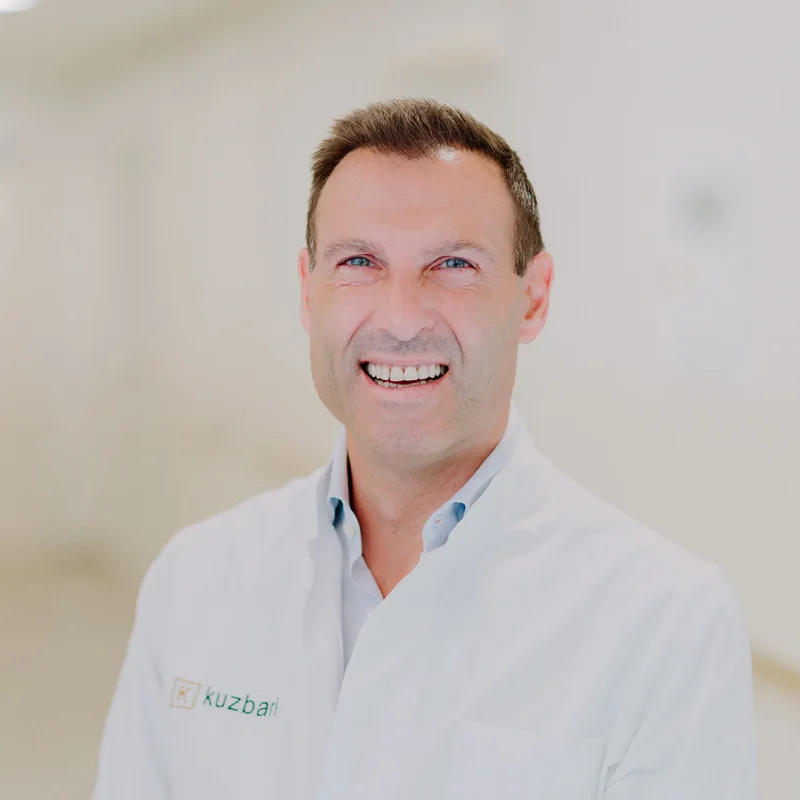
Dr René Draxler
Specialist in Plastic, Aesthetic and Reconstructive Surgery · leading expert in Botox & fillers
-
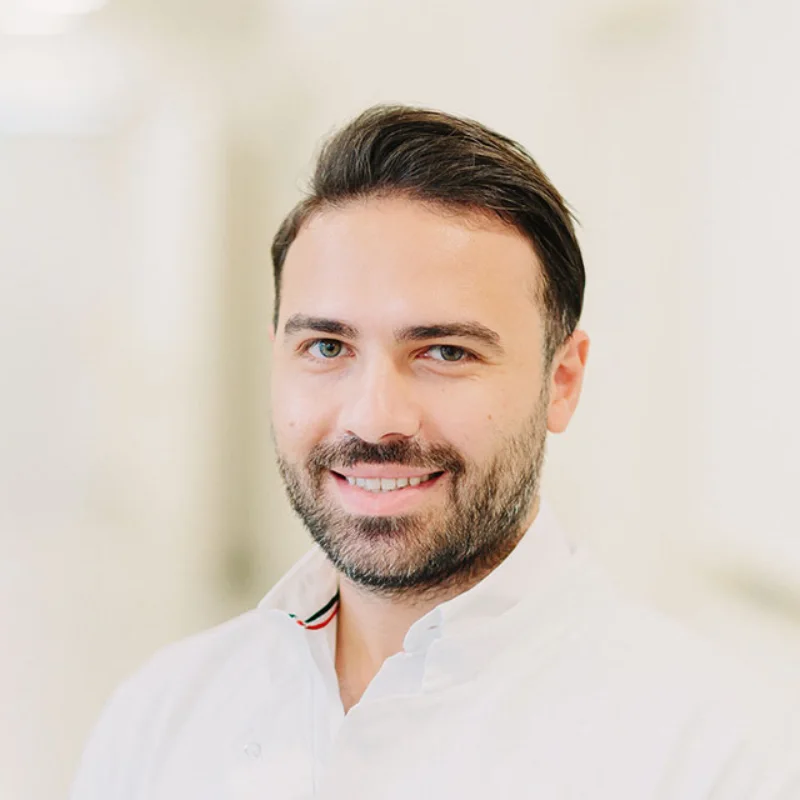
Dr Shawqi Arafat
Specialist in Plastic, Aesthetic and Reconstructive Surgery · leading expert in Botox & fillers
-
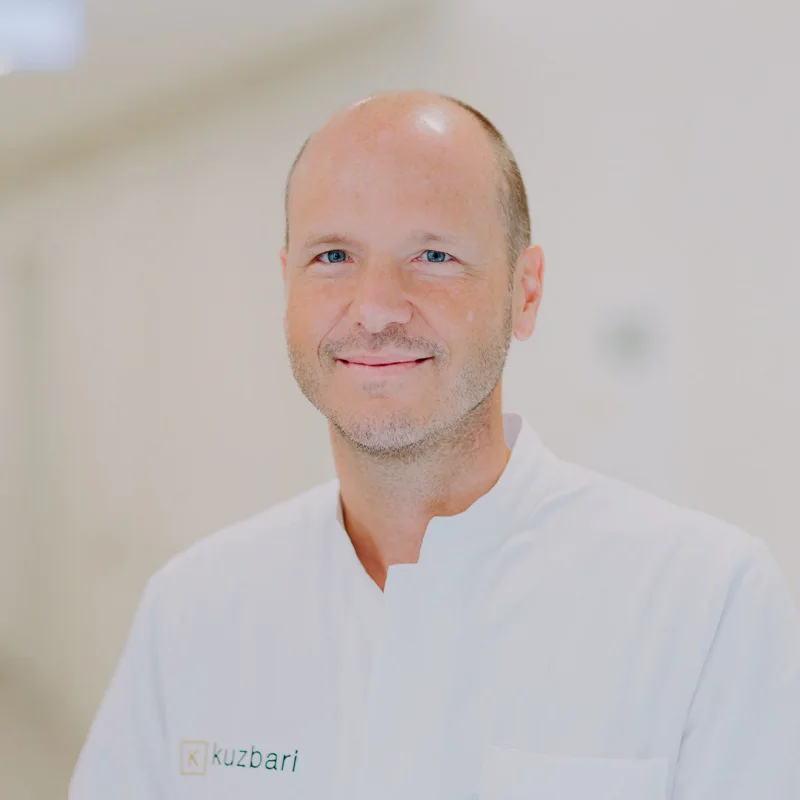
Dr Andreas Dobrovits
Specialist in Plastic, Aesthetic and Reconstructive Surgery · leading expert in Botox & fillers
-
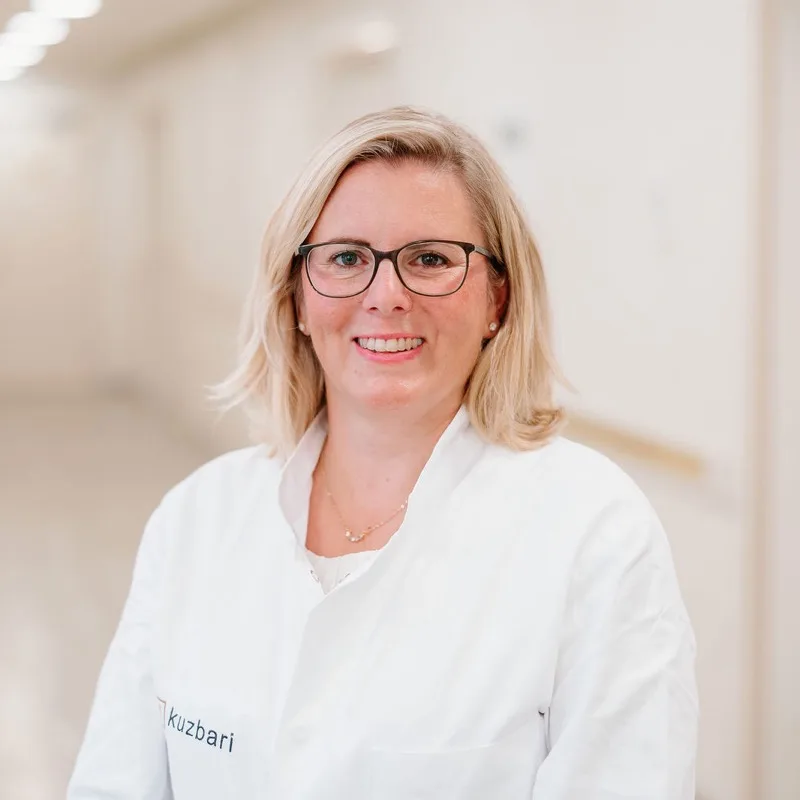
Dr. Esther Tamandl-Wassermann
Specialist in Plastic, Aesthetic and Reconstructive Surgery · top expert for Botox & fillers
Book your introductory consultation now!
At this appointment our doctors take plenty of time for you. We listen to you, analyse the areas that trouble you and show you how they can best be treated. And if you wish, your treatment takes place straight away.
We always make sure there are enough free appointments – you can reach us by phone on +43 1 358 28 77.
Our experts for Botox & fillers
DDr. Jessica Wittmann
Specialist in Oral and Maxillofacial Surgery · leading expert in Botox & fillers
Dr René Draxler
Specialist in Plastic, Aesthetic and Reconstructive Surgery · leading expert in Botox & fillers
Dr Shawqi Arafat
Specialist in Plastic, Aesthetic and Reconstructive Surgery · leading expert in Botox & fillers
Dr Andreas Dobrovits
Specialist in Plastic, Aesthetic and Reconstructive Surgery · leading expert in Botox & fillers
Dr. Esther Tamandl-Wassermann
Specialist in Plastic, Aesthetic and Reconstructive Surgery · top expert for Botox & fillers